
When it came time to pick which teenagers would receive $100,000 to skip college, Danielle Strachman sometimes relied on a technique she used with fourth graders.
In 2010, Strachman was running the K-8 charter school she co-founded. A year later, she was inside the Thiel Foundation’s Presidio office, surrounded by 40 telephone book-sized binders holding information about each Thiel Fellowship finalist, trying to figure out who’d receive the inaugural grants.
To kick off conversations about finalists, Strachman had the foundation staff close their eyes. She would say the name of a finalist and count down, three, two, one. Everybody stuck out a thumb, up or down. Then they’d open their eyes and see where the room stood. “We’re all deep learning machines and process things in ways that can’t be categorized in checkboxes on a page,” Strachman says. “This exercise uncovers independent thinking, judgement and ensures that all voices in the room are heard.”
Among the fellows she helped select in her years as program director were Vitalik Buterin (Ethereum co-founder), Dylan Field (Figma co-founder), Chris Olah (Anthropic co-founder) and Laura Deming (Longevity Fund founder).
The fellowship was built on philosophies Strachman carried over from a decade in alternative education: a person can’t be captured by a grade or a test and does better setting the direction of their own learning. The money and support were meant to give fellows permission to pursue whatever idea they wanted. But as the fellowship’s prestige grew, being chosen became an accomplishment in itself — perhaps turning it into the type of credential it was designed to fight against.
It’s easy to point to the value of the companies that fellows built. But 15 years after that first class, those involved disagree about how else to evaluate its success.
The homeschooler and the billionaire
Strachman was raised on the East Coast by parents who each ran small businesses: Dad was a mechanic who specialized in foreign motors and Mom was an unlicensed general contractor. Neither had a college degree and like many other working-class parents, wanted one for their daughter.
“I was a good student in the quiet, daydreaming out the window way,” she says. “But I was the type of student who’d study really hard and still get a C, maybe a B.”
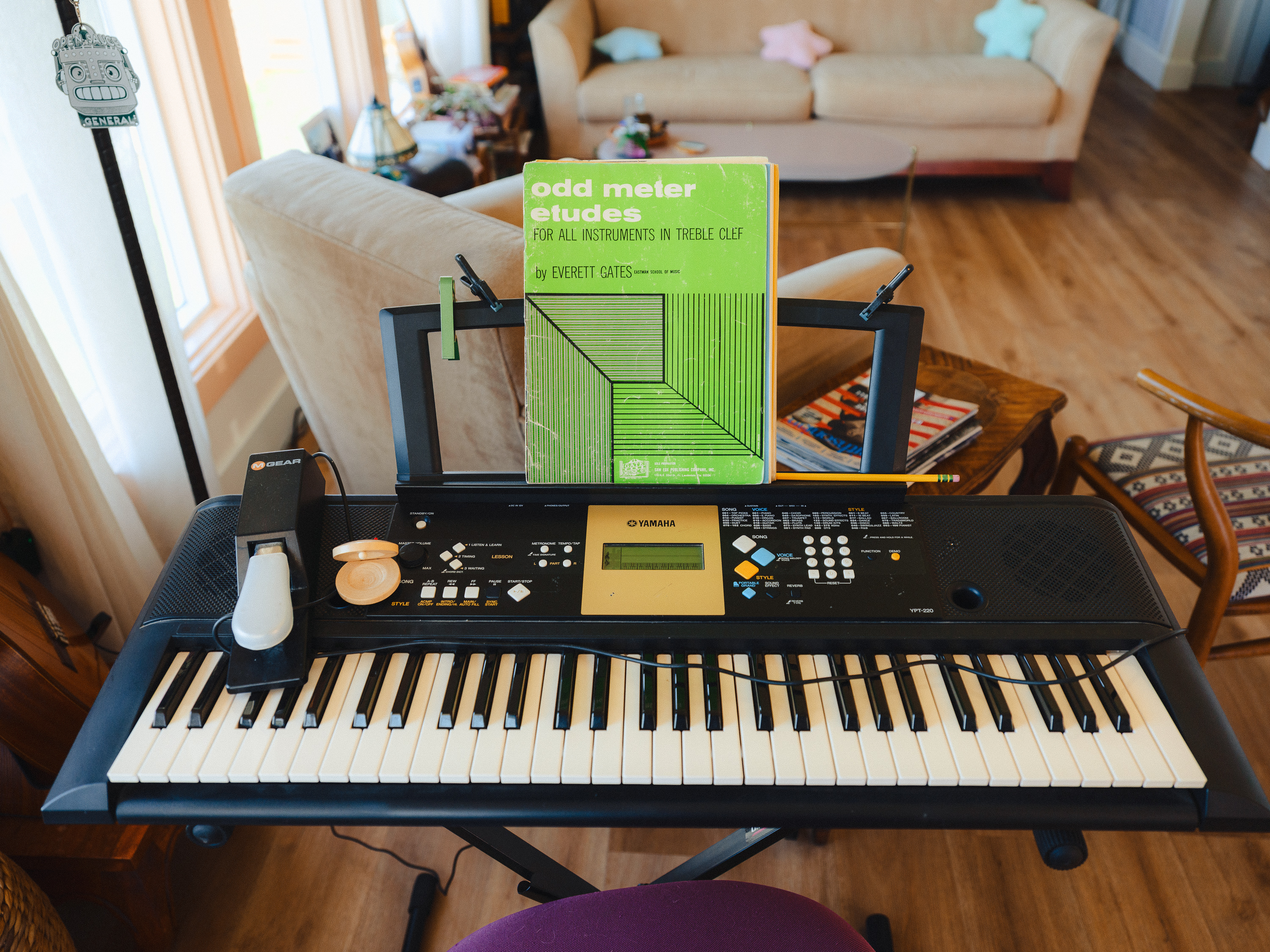
A lot of Strachman’s thinking around education was shaped by osmosis through music. She played clarinet in the school band and also took private lessons — but quit lessons because she could tell her teacher would’ve rather been performing. She later had another teacher who actively invested in her learning, taking time on the weekend to help her pick out a new clarinet. The outcomes were measurable; through this teacher, she’d go on to compete and win placement in district festivals.
As high school ended, Strachman was about to become the first person in her immediate family to get a degree. Standing in the foyer of her house opening her acceptance letter to Simmons University, she remembers questioning out loud if she even wanted to attend college in the first place. “My mom overheard and got in my face and said, ‘Over my dead body will you not go to school. Women fought for your right to go to school,’” she says. “That was my first experience of getting something I thought I wanted and rethinking it.”
At Simmons, she decided to study education. When she told people her major at parties, they’d “turn away like they smelled a fart.” So she switched to neuropsychology.
To get experience, Strachman walked into Beth Israel Deaconess Medical Center and sat in the waiting room so long that someone eventually offered her a meeting, which turned into an internship. Working with patients was her favorite, specifically cognitive testing and behavioral observations.
She was accepted into grad school but chose not to go.
“As a kid who didn’t get good grades and felt behind, it was gratifying to have my peers be like, ‘Oh you must be so smart,’” says Strachman. “But I realized what I loved about neuropsych was the kudos I was getting from other people. And that’s when I did a big U-turn.”
The Thiel Fellowship idea came together in 48 hours.
It was conceived the day before Thiel’s announcement on stage at TechCrunch Disrupt in 2010, as Thiel was flying to San Francisco with Luke Nosek (co-founder of both PayPal and Founders Fund), Jonathan Cain (former president of the Thiel Foundation) and Jim O’Neill (former CEO of the Thiel Foundation). Several accounts say Thiel had received an advance copy of the script for The Social Network, and didn’t like his portrayal as a ruthless capitalist complicit in Mark Zuckerberg exiling his co-founder from Facebook. Thiel also considered starting a university but decided it wouldn’t work (he’d been attacking higher education for a decade at that point). On the plane, the group brainstormed what they began calling “the anti-Rhodes scholarship.”
Michael Gibson learned about it on his first day working at the Thiel Foundation. He’d been hired to help Thiel teach a class at Stanford Law School and work as an analyst at his hedge fund after previously working as a tech journalist, studying philosophy and eventually dropping out of his Oxford PhD. Now the Thiel Fellowship — which they decided to call the “20 Under 20 Thiel Fellowship” on the way to TechCrunch Disrupt — was Gibson’s new project.
Strachman saw the clip on YouTube after it’d been announced. At the time, she was living in an “intentional community” called Monroe House in Mountain View, decompressing after a seven-year stint in San Diego.
Instead of going to grad school for neuropsychology, she pursued teaching — but without a credential, her way into the industry was starting a private tutoring practice. Most clients came through Craigslist ads, like the mother of five who needed some extra help homeschooling her kids.
Normal tutoring gigs were about catching students up. Conversely, homeschooling worked at each individual’s pace — Strachman quickly fell in love with the fact that children were given freedom to explore their interests. She immersed herself in that world, staying extra hours to talk to parents about their teaching philosophies and devouring the alternative education canon (Maria Montessori, John Holt, John Taylor Gatto).
Christine Kuglen, who was homeschooling her four children and running a co-op out of her house, hired Strachman as a creative writing tutor. Kuglen was considering building a school and approached Strachman about doing it together.
After two years of paperwork and approvals, Innovations Academy opened in 2008. Strachman spent the next two years working 80-hour workweeks while co-directing the school. Needing a break, she then followed a boyfriend to the Bay Area without much of a plan.
It didn’t take her long to start running in some Thiel-adjacent social circles.
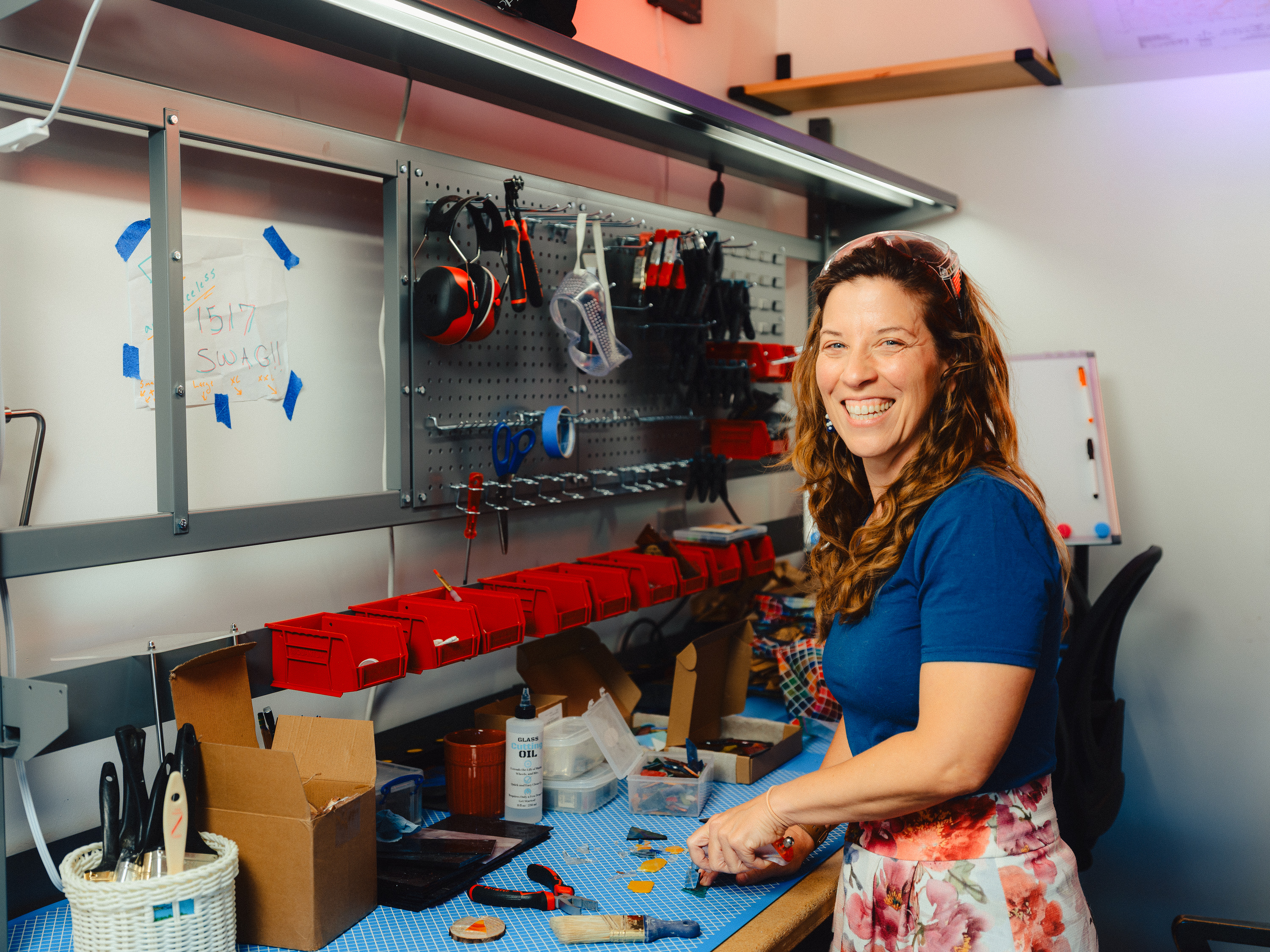
Strachman knew many of the nonprofits Thiel funded and the people behind them. One of those was the Seasteading Institute, which founded Ephemerisle (an event where attendees connect boats, rafts and docks to form autonomous islands for decentralized self-governance experimentation). Strachman attended, which is where she met some of the Thiel Foundation team, like Gibson, Cain and O’Neill. Through these connections, she got introduced to Lindy Fishburne who was then a director at the Thiel Foundation and contracted Strachman to run an event. “She was available, could help organize and was running around in those worlds,” Fishburne says.
Weeks after the event, Strachman got another call from Fishburne: “The Thiel Foundation has lost its mind! They started this new program, and they have no one running it. You have to get over here. It’s perfect for you.”
When the Thiel Fellowship was announced in 2010, it was in the wake of the Great Financial Crisis. Education costs and student debt were rising. A whole generation was graduating into an economy with very few jobs waiting for them — learning quickly that degrees don’t ordain success. Thiel criticized the cost of college, calling it a “bubble” (the same word used for the housing market that had just collapsed): “Education may be the only thing people still believe in in the United States. To question education is really dangerous. It is the absolute taboo. It’s like telling the world there’s no Santa Claus,” he told TechCrunch in 2011.
Critics saw it as a hypocritical PR stunt from a man who holds both an undergraduate and graduate degree from Stanford University. Over the years, the fellowship would be called a “nasty idea” and “the single most misdirected bit of philanthropy in this decade.”
Within this context, Strachman got coffee with the president of the Thiel Foundation several days after the announcement of the fellowship. “At the end of the interview, I was like, ‘You’re not really going to write a young person a $100k check and just call it a day, right?’ And he didn’t answer the question,” she says. “I thought, ‘Oh my god, these people are screwed.’ I told him that I should write a needs assessment and if he thought I understood what the program needed, then he should hire me. And if he thought I didn’t get it, then hire somebody else.”
We were very much building the airplane on the way. Up or down. Whichever way we were going.
An application is 2D, but you’re a 3D person
Strachman got the job and early on, asked Thiel if he wanted all the fellows to be doing startups. “He said, ‘Absolutely not,’ which I loved,” Strachman says. “We could be really creative with the types of people here. They could be building a nonprofit, or a startup, or doing research. We had some people more on the activism and art side.”
While there wasn’t a clear profile of what a Thiel Fellow looked like, Strachman says she knew what they were looking for: high-agency young people working on ambitious projects who were excited to take the leap from school. Certain questions in the application uncovered these types of people:
- Tell us about a time when you created an opportunity or connection for yourself that didn’t previously exist — “We were looking for high agency here, the ability to create from nothing and not ask for permission,” Strachman says.
- What do you want to accomplish in the next 10 years? What do you want to accomplish in the next two years? What do you plan to accomplish in the next three months? — three separate questions meant to show an applicant’s vision that would propel them into the future. “We also checked in on the three-month question during the application cycle to understand if they had actually worked to move the ball forward during that time,” says Strachman. “It wasn’t about if they did what they said they would. It was looking for strategy on if they were adjusting their plan as their trajectories changed. I wish we would’ve given each one a small amount of money to see what they’d do with it.”

The team received half of the 438 Thiel Fellowship applications on the last day, New Year’s Eve, 2010.
That first year, it was members from the Thiel Foundation, Founders Fund and the Seasteading Institute all reading applications. Each person had a stack of about 100 to review (apps got reviewed by more than one person).
Assessing these applications, Strachman says she was diligent about using rubrics for scoring applicants: “I wanted to make sure we were sharing the same reality in how we looked at people.”
Poor applications lacked both “clear vision/mission” and the expertise or learning skills to “pull off execution.” Amazing applications had “clear and strong vision to disrupt a particular field” and “ideas of how to execute and may already be implementing them.” The rubrics also had some reviewing tips, including:
- We’re most excited about science, tech, and highly disruptive projects from any field.
- Definitely give extra kudos to those who seem to achieve more with less available resources.
- Better schools/SATs doesn’t necessarily translate to being a visionary.
- We’re impressed by people who have already stopped out of school to work on a project.
- People who sound like or identify as inventors and tinkerer types are generally promising.
- Homeschooling has generally been a positive attribute, especially for self-starters.
Stanford sophomore Tom Currier’s application crystallized a lot of what they were looking for.
He wrote about growing enough bamboo in his parents’ backyard to make a house out of it. It was less about his pitch of robotic solar panels that followed the sun and more about his creativity, ambition and progress, while showing all the ways he’d been a builder and maker.
“Some applications were like, ‘If I get this, I’ll do X, Y, and Z.’ But Tom’s was like, ‘I’m in school right now, I’m doing this thing, I’m really excited about it,’” Strachman says. She described the profile of a fellow as someone who has “dog-on-leash energy” — and the fellowship’s job was to cut the leash.
“We also looked for people who were two standard deviations out on curiosity,” she said, recalling a story of Ethereum co-founder Vitalik Buterin typing on his phone in Mandarin, and finding out he was learning the language because Ethereum was spinning up communities in Shanghai. “I used to say that I thought I knew what a curious person was, then I met Vitalik.”
Second-year fellow Dylan Field’s application caught their attention for its contrarianism. Before co-founding Figma, he was a junior at Brown who’d already “stopped out” with a number of accomplishments, like leading Brown’s CS group and running and winning hackathons.
He chose not to include his SAT scores, writing: “The concept of standardized testing is contradictory to two values the Thiel Fellowship supports: lifelong learning and independent thought.”
In one application section, Field wrote about his internship for LinkedIn’s Data Analytics team. Inspired by the work of Robert Munro, he had an idea for how to use data to match volunteers with nonprofits, but an exec told him it wouldn’t scale. After completing his normal duties, he’d return to the idea — eventually pitching the project during an org-wide all hands.
In another section, an essay question asked: “Tell us one thing about the world that you strongly believe is true, but that most people think is not true. If this belief shapes the way you live, tell us how.”
When he published his application years later with commentary, Field explained that Silicon Valley’s fixation on contrarian ideas bothered him even then — so he decided to be “meta-contrarian.”
He wrote nearly 500 words about chocolate. “Chocolate is repulsive. Even the smell of it makes me want to vomit. Although I have other beliefs that distance me from the majority, no conviction elicits a stronger reaction than admitting I detest chocolate.”
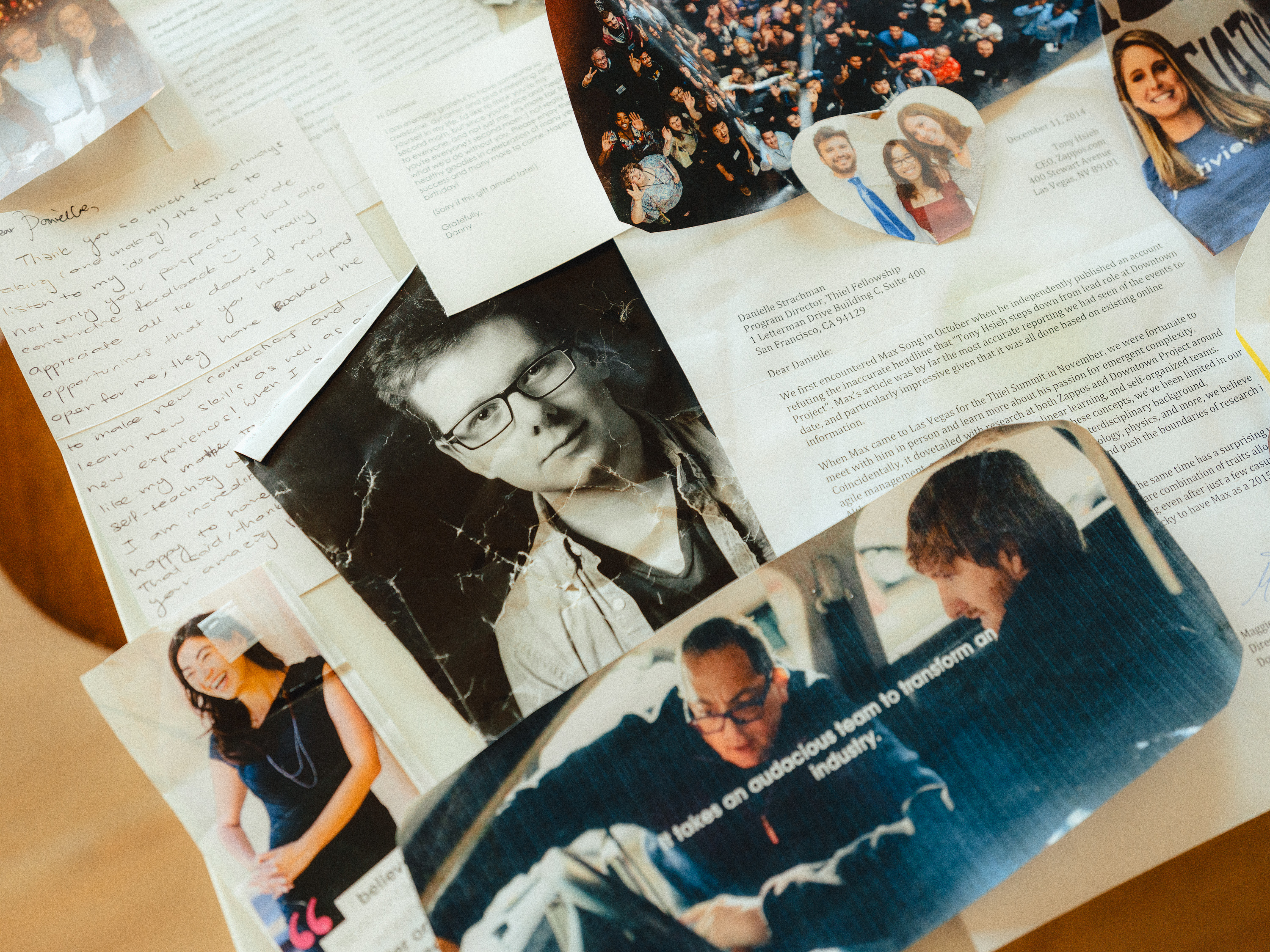
The early life of the Thiel Fellowship is laid out on Strachman’s kitchen table in handwritten letters, creased photos and yellowed magazine clippings that curl at the edges. Most of them are about or from fellows, with letters thanking Strachman for her mentorship, friendship and generosity. These memories haven’t just been lovingly stowed away, they’ve been folded and unfolded, taped and untaped, coffee-stained. They’re alive.
She picks one up. “It was really special. It just makes me so happy to think about that first group.”

She met the inaugural group of 40 hopefuls at San Francisco’s Hyatt Regency in 2011, where finalist Brom Rector greeted everyone in the lobby. “I remember thinking he was kind and socially savvy, how he brought the energy I wanted to the event — collaborative, not competitive,” says Strachman.
I didn’t want this to be a science fair competition.
Rector organized a group dinner that night, forging the community Strachman hoped the fellowship would provide. “I wanted people to know that no matter what happened, this is your peer group. Because we kept hearing, ‘I don’t get to meet other people like me,’” she says.
Field’s parents, in the next year, came around to the idea of the fellowship after meeting Strachman and the other finalists. “As my dad put it: ‘I always knew you were weird, but it’s cool to see there are other people who are weird out there too,’” says Field.
Evaluations started the next day — but finalists weren’t always told what counted toward the final decision.
The first was the formal interview, conducted by Thiel Foundation board members plus some Clarium Capital employees. The goal here was to understand what the finalist was going to make of the fellowship opportunity, and how it would propel them forward. Strachman says they didn’t want to have to convince people to try and build something or become an entrepreneur. It became one of the largest inputs to deciding who’d receive a fellowship.
Next were two- to three-minute lightning talks, in which finalists would present their ideas to a group of 75 audience members, including investors, operators, founders and Thiel himself in the back row. Finalist Eden Full was the first to present — she pitched SunSaluter, a low-cost, gravity-powered solar panel rotator she originally built as a high school project — and Strachman remembers her in the hallway, visibly terrified. But when the spotlight turned on, she nailed it.
Lightning talks fed directly into a cafe-style mentor match. Finalists were placed at tables where mentors — entrepreneurs and technologists who coached fellowship recipients — could learn more about each finalist. Mentors filled out feedback cards, and one question was especially impactful: Did you have more or less energy after talking to this person?
In following years, they began adding more programming to finalist weekend.
Strachman organized events to help see how people performed in a group and under mild pressure, like doing a scavenger hunt and working together to build a LEGO bridge spanning a table. She kept getting asked if any of these counted and kept it vague, saying “It’s fine for them to think this is part of the criteria.”
Previous years’ fellows also became part of the informal mingling among finalists. While finalists might’ve seen peers, current fellows reported their findings back to the judges. There were times fellows told Strachman a person would act differently when staff left the room or that their projects didn’t actually work. “The finalists would be casual with the fellows not realizing fellows want every new fellow to be excellent, because this is a very small peer group,” Strachman says.
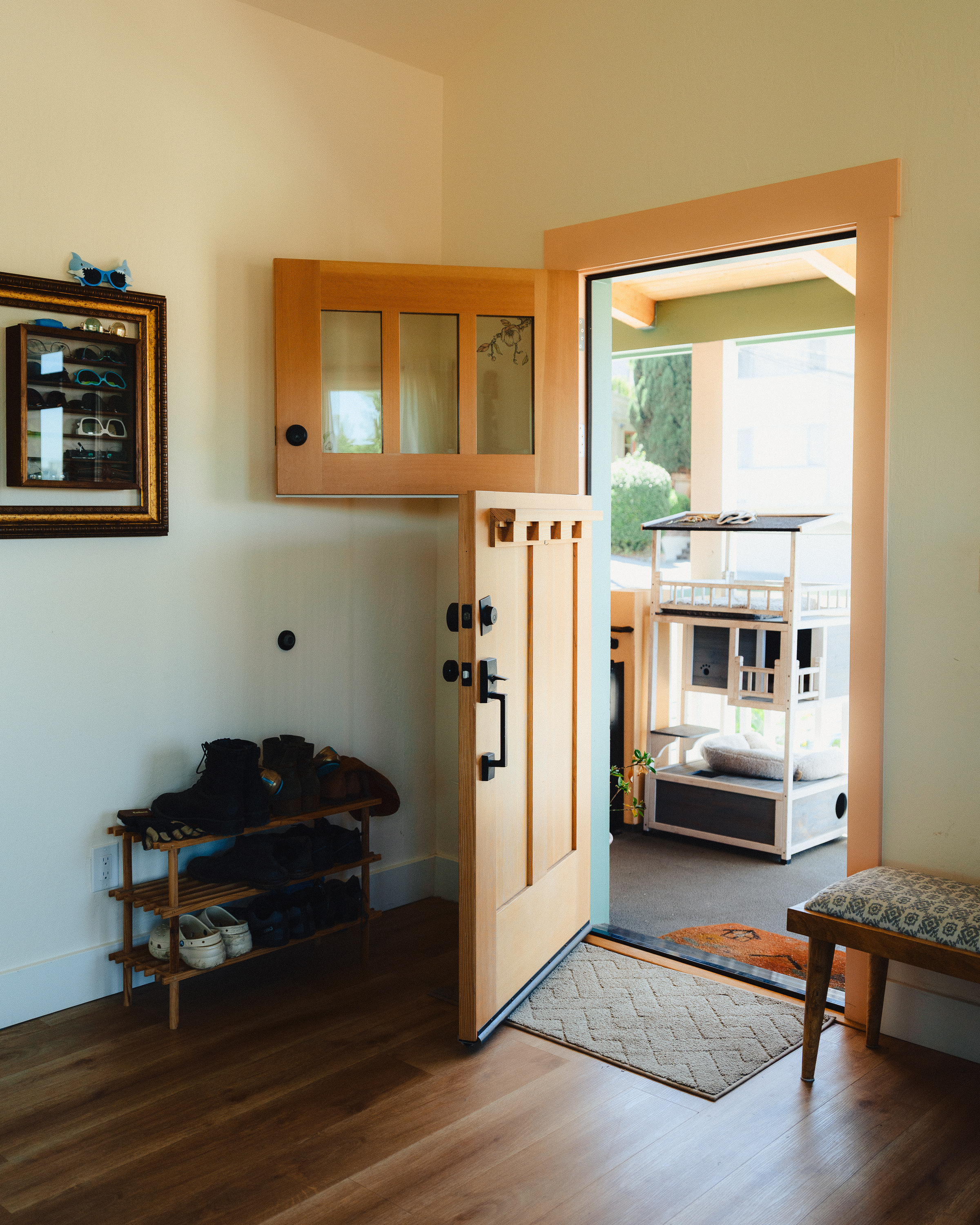
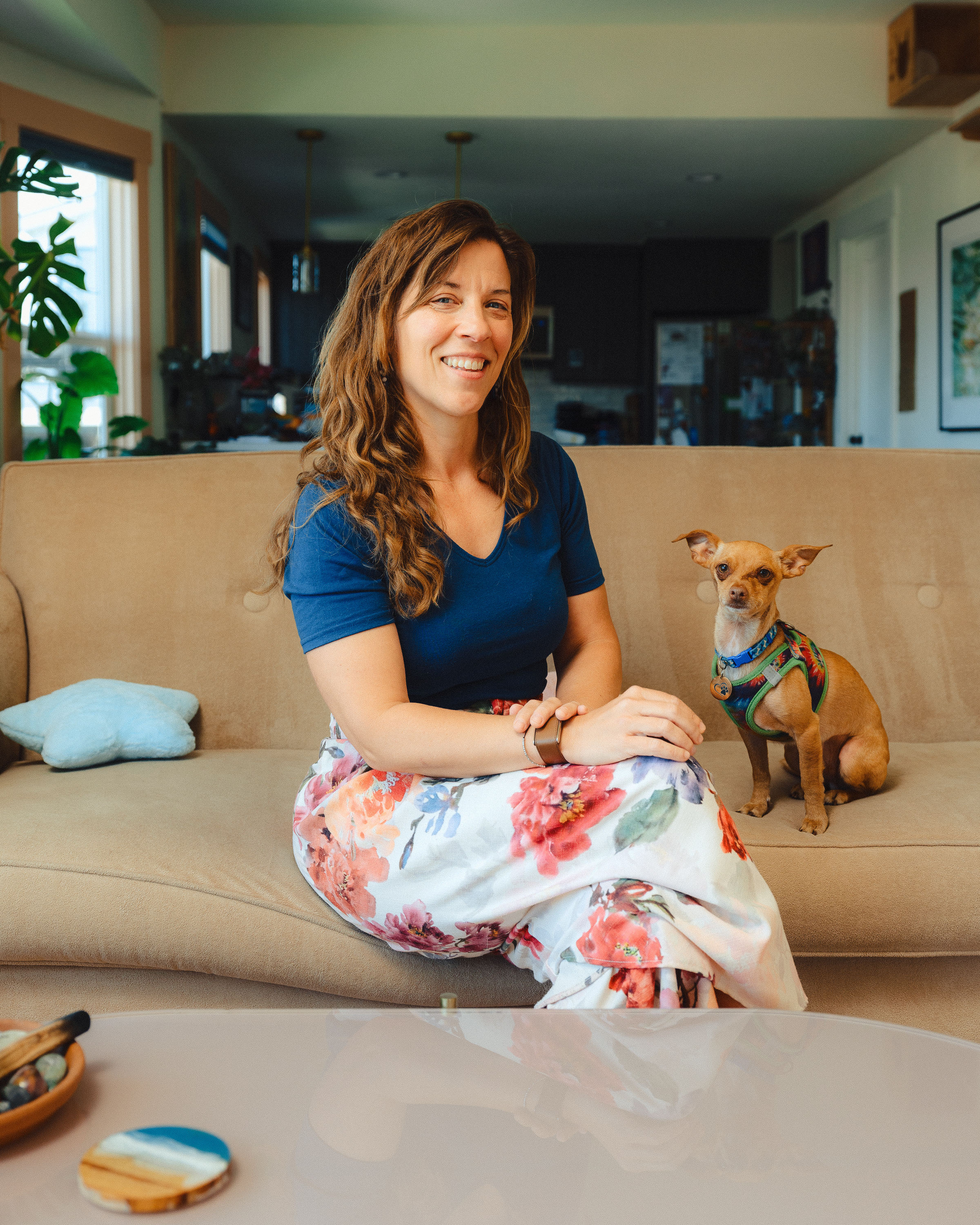
The Dutch door is open when I arrive at Strachman’s house and through it, I can see her in the kitchen making tea for a young man with messy hair and a backpack at his feet.
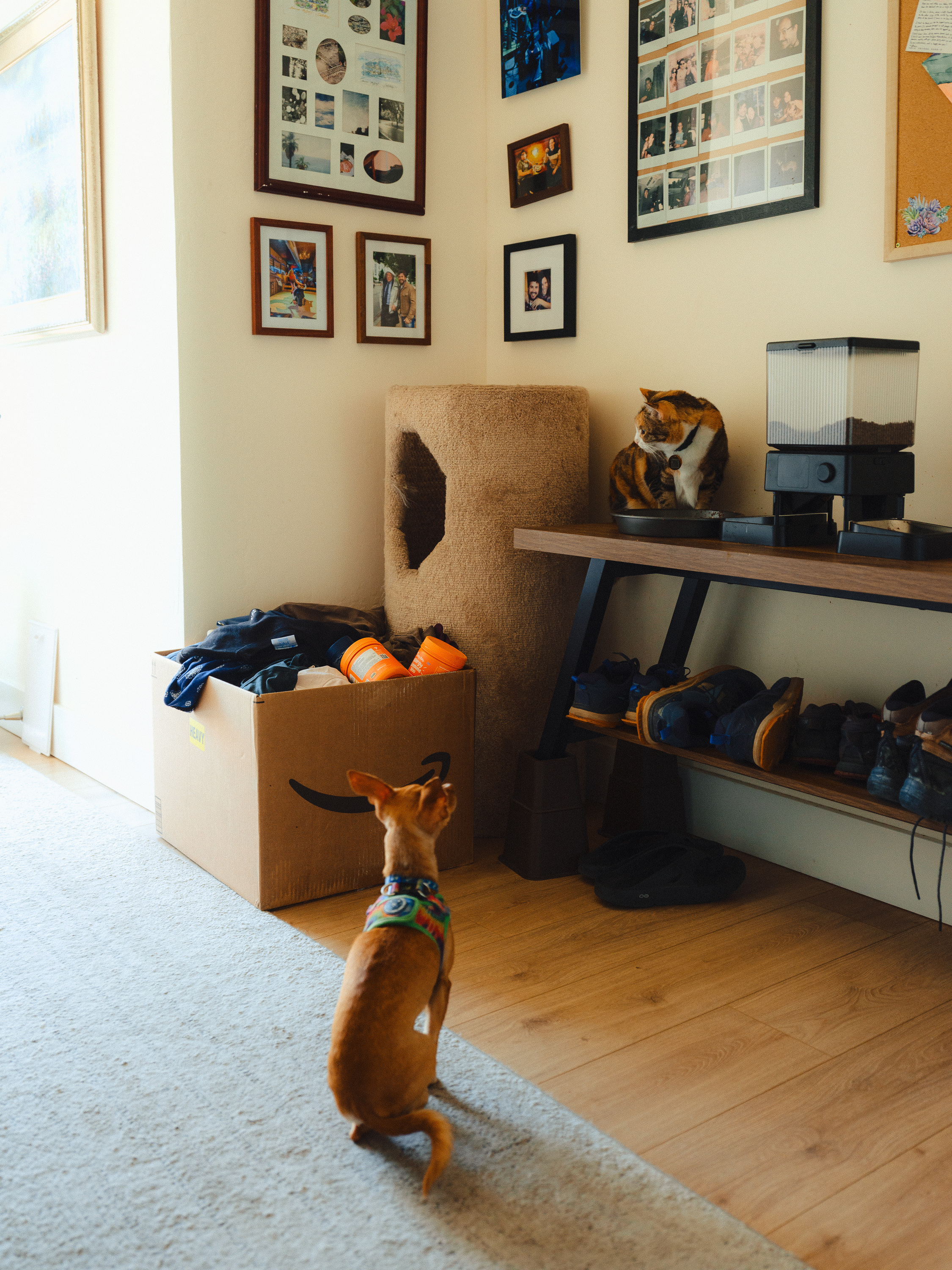
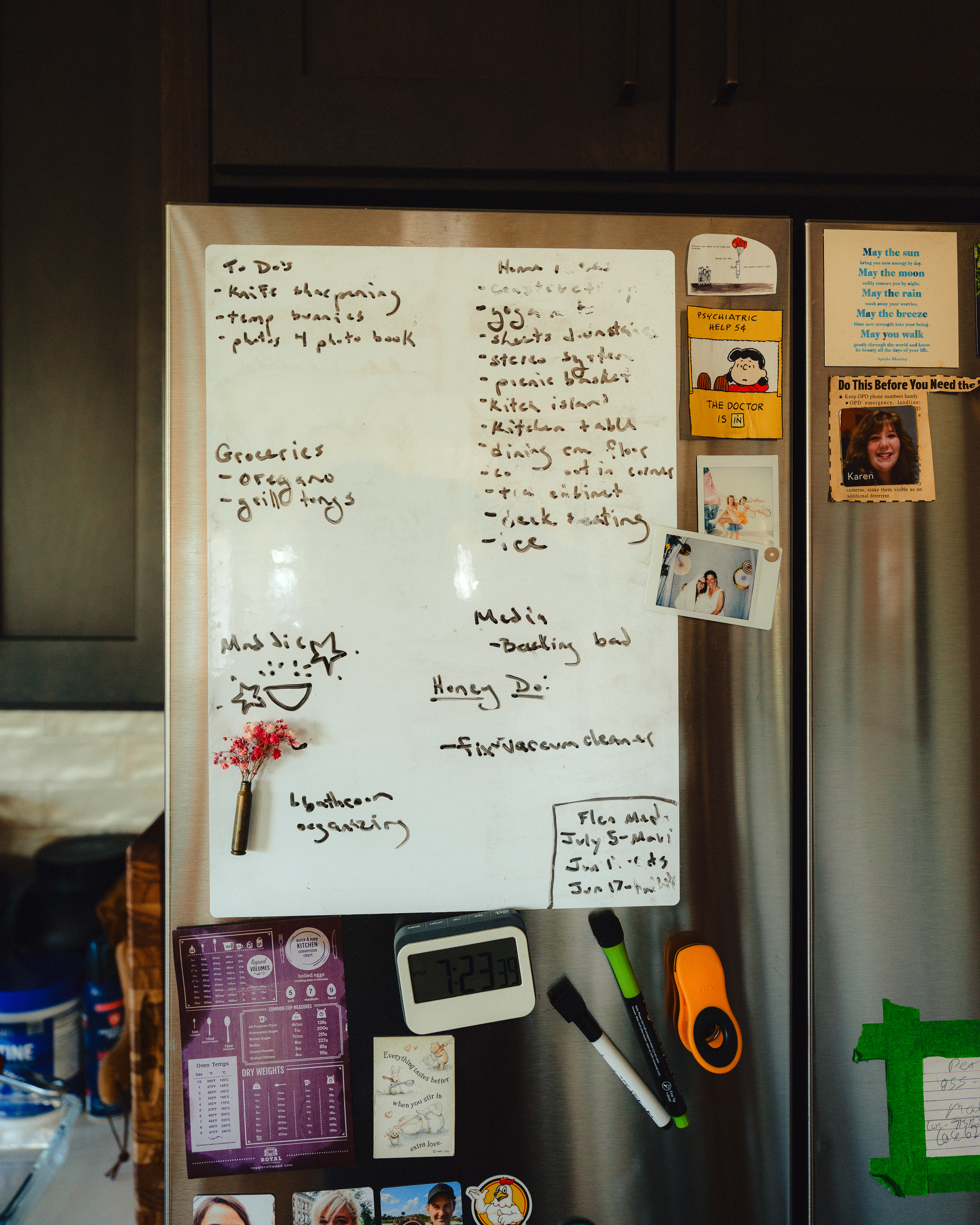
“Hudson is a founder,” she says, once I’m inside. “He needed a place to stay so he’s crashing in the spare room.” There’s another founder in the studio downstairs. Three cats come and go as they please and Maui the Chihuahua’s nails clack on the hardwood like a metronome to the classical music playing on an FM radio station. I get the sense Strachman likes a full house. Her godchildren live next door and years ago, she tore down the fence separating her yard from theirs — the fence seemed beside the point.
In a third bedroom live Strachman’s two rescued rabbits, both of which were screened for disposition: “I was looking for confident bunnies who would do well in a multi-species household. It’s very hard to figure that out.”
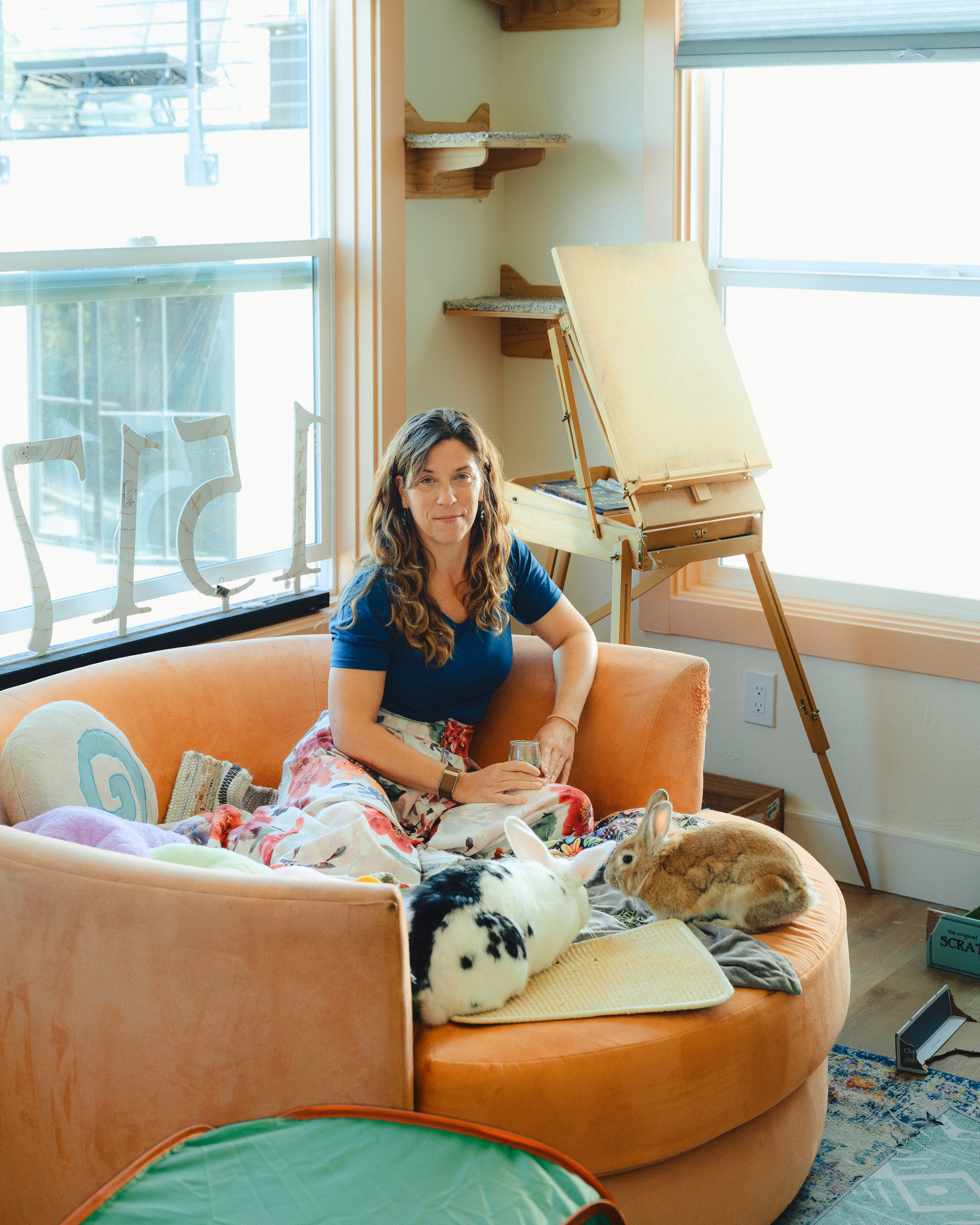
This is a version of a problem Strachman has been dealing with most of her adult life. Across her work in cognitive testing, alternative education and the fellowship, Strachman returned to a central question: What can you learn about someone through observation that a formal assessment misses?
Their application, artifacts they shared, mentor feedback, the team’s accumulated notes — were all in those binders staff used to select fellows from that group of 40 finalists. Strachman was trying to get the whole picture of a person. “An application is 2D, but you’re a 3D person,” she says.
While there may have been a rubric in the application review process, when it came to deciding finalists, there was a lot of nuanced information to consider. So someone drew two axes on a whiteboard: ambition of the project and the person’s ability to achieve it. Each finalist’s name was written on a Post-it note and for three days, moved around the axes as judges debated where they fell.
Fellowship founding team member Michael Gibson describes a process that deliberately allowed individual conviction to carry weight. “It was never meant to be a committee decision. You could have a ‘golden buzzer’ situation where someone would just believe in a person,” he says. “Peter is very much insistent on independent judgement and singular vision, and we wanted to honor that, even if it was just us five in a room talking about candidates.”
But Strachman says there were also other dynamics at play. She remembers running into the mother of Luminar founder Austin Russell at a print shop. “I love her to death, but she had a little bit of that stage mom thing going on.” Strachman and Gibson hid behind a bookshelf to avoid her because every chance she got, she’d bombard them with stories about Russell. “They were amazing, interesting stories. But not every finalist had someone like that, and we wanted everyone to get the same treatment.”
Russell ended up getting a fellowship. So did Eden Full — who asked Strachman afterward if she was chosen partly because she was a woman. “I said, ‘You’re our top candidate. Mentors thought you were incredible. You’re already working on your work. You were at the top of the list,’” Strachman says.
Other choices were more difficult.
Cory Levy, who had already started a company and raised venture capital, didn’t receive a fellowship. “We thought he was too far along. In my heart of hearts, nonprofit money is for offering a leg up where it’s needed,” says Strachman. “We were also running an experiment to see if resources actually made a difference to their outcomes. If someone came to the fellowship and already had resources, were we really a resource or were we a prize list? I wanted to be the former.”
When it came to Dale Stephens (who was working on UnCollege, a company that promoted self-directed learning), Strachman worried if he was tech-centric enough. He ended up receiving a fellowship because of his placement on the “ability to achieve it” axis.
Brom Rector, the finalist who greeted everyone in the lobby, split the room. Everyone loved him but hated his finance project. In the interview, the team kept trying to give him an exit, asking what he’d do if his idea wasn’t working. He just kept saying he’d try harder. “We wanted him to say, ‘I’ll do something else,’” Strachman says. “For the love of God, just say you’ll do something else.” He didn’t get the fellowship.
His denial was more about what staff heard in his responses — someone who’d been taught that the answer was always to try harder. They wanted more flexibility and adaptability, and didn’t want to have to coach him on it. “We wanted the opposite of the right answer or the standard operating procedure, which I think is very Thiel-ian in nature,” she says. “We wanted him to say he had more ideas to try, that this wasn’t the only thing he’d work on.”
“If I could do it again, I would take him,” she admits. “He would’ve added a social glue factor that would’ve been an interesting component in our community.” Rector now runs his own fund, and Strachman is an LP.
After three days of binders and whiteboards and thumbs going up and down, the man whose money they were granting approved the whole thing in three words. He set the direction then, it seems, stayed at arm’s length. Gibson says Thiel scanned finalist photos in silence, then said “OK, looks good.”
Navigating newfound freedom
Eden Full’s roommate that first finalist weekend was Tessa Green — a high school senior who was working on a new kind of battery. The fellowship seemed like a way to push her idea forward; she didn’t know who Peter Thiel was or anything about Silicon Valley.
Green learned she’d been offered the fellowship during MIT’s Campus Preview Weekend for admitted undergrads. “The night before I’d stayed up with three other kids and was thinking about how these would be my best friends forever. I was hooked on all of it,” she says. “I wasn’t sure what to do. I felt like I was really fitting in for the first time in my life. At 18, I really wanted to fit in.”
Her parents had reservations. She wasn’t sure the money was enough to build what she wanted. There was a lack of structure. “As a startup kind of thing, the first year they were really laying the ground as they did it,” she says. “I felt like I could go study engineering at MIT and learn the skills I needed, and that felt clearer as a path than getting some money, which wasn’t enough to make my idea happen.”
She didn’t take the fellowship.
“If someone should be in school, that’s where I want them to be,” Strachman says. “People have to be really thoughtful about their time and energy and futures. As far as we know, we only get one of those.”
Almost everyone who accepted the fellowship moved to the Bay Area, which was something organizers didn’t expect. Strachman remembers fellows landing in scattered apartments across San Francisco that first year, so she adjusted in subsequent years — partnering with co-living operators to set up houses and finance a summer’s rent for fellows who wanted it. One central location became Mission Control, a hacker house that has been with the fellowship and fellowship-adjacent communities for over a dozen years.
In 2012, after receiving the fellowship, Dylan Field was on The Today Show in New York City talking about the fellowship and describing “an in-browser editor” during a segment where he got paired with Olympic swimmers Katie Ledecky and Cullen Jones. The next morning as he returned to California and got back to the house, his future co-founder Evan Wallace was returning from an entirely different adventure. Wallace had been staying with other Thiel Fellow roommates and went on a hike, looking "real beat up," according to Field — they got lost well into the previous night, ran out of water and were sunburnt.
Tara Seshan, who was a 2012 fellow and is now a member of product staff at OpenAI, decided to move to the Bay Area from North Carolina. “Those first weeks were very lonely. I moved to Berkeley and lived with some friends because I felt like a college town would be a more familiar place to be,” she says. “I had to learn how to find community and find myself — that was very formative for me.”
When the fellowship started, Strachman organized an orientation retreat within the first month: sharing the staff’s vision about the fellowship, expectations about how they’d use the opportunity, connecting them with mentors and creating time for fellows to bond as a group. “The balance we were striking was treating them like high-agency adults who were really far ahead of their peers in their areas of expertise, while also adding programming for them to collaborate and set their visions — not treating them like children or within a hierarchical framework,” she says. They also kicked off individual quarterly reviews with fellows.
But the staff were also learning what fellows wanted. At the retreat, Strachman worked with experts to create company-building content she thought fellows would need (legal basics, accounting, negotiation, etc.). She got the feedback that fellows wanted less content — so in later years, they moved to a buffet-style approach with opt-in sessions.
“Company-building lessons have to fall on fertile ground,” says Seshan. “At that moment, very few of us were thinking, ‘Let’s learn how to be great managers.’ Instead, I was thinking, ‘What am I even doing? Can I make something useful and valuable?’”
“They only wanted to learn about firefighting when the house was on fire,” Gibson says.
Social events dominated in later years. Strachman says that fellows had a lot on their plates and what they really wanted was time with their peers, so retreats refocused around playing Mafia, hanging out and decompressing. Organizers even gave fellows a $2,000 monthly budget to plan an event. “I think Thiel Fellows have an appetite for novelty seeking and positive risk-taking behaviors — probably higher than the average person,” Strachman says. “So it didn’t surprise me when people would organize a hang-gliding event or a motorcycle class.”
Mentorship became one of the most important pieces of the fellowship.
Bill Hunt, a founder who’d sold five companies, was one of the most active mentors in the fellowship’s early years. “It was very informal. In the beginning, there was very little structure to the whole thing,” Hunt says. “Danielle was deeply involved and focused on helping each person find their own path and change the world in their own way. The fellows themselves were extraordinarily ambitious. Much of the drive toward doing something exceptional came from them.”
After that first year, former fellows also became valuable resources for new classes. Inaugural fellow Dale Stephens pushed Dylan Field to apply in the first place. They first met at a cafe in Providence, introduced by a mutual friend. Stephens showed up 25 minutes late to a 30-minute meeting and spent the final five minutes pushing Field to apply. “He became someone that was texting me more than most of my friends at Brown. And that really got in my head and made it go from something that’s on TechCrunch that seemed kind of weird to it being a real thing,” says Field. “And I’ve paid it forward in terms of pushing other people to apply. It doesn’t mean you have to take it.”
When I ask Field what the fellowship gave him that Brown couldn’t, he says it’s activation. “I believe we would've worked on the company with or without the Thiel Fellowship. But simply applying helped me activate to do weekend syncs with Evan and really think seriously about starting something together,” says Field. “The fellowship community also gave me a push to think bigger. Tom Currier, a fellow from the first year, told me something like ‘You have two years when you can do anything you want...so why aren't you trying to do something really hard and meaningful?’”
So much of the fellowship’s approach comes from Strachman’s alternative education principles — choice and non-coercion, relationship-based teaching, child-led learning, respect for the individual, multi-age peer groups.
A lot of people think Montessori is buying the blocks and tools. But really, Montessori is about reverence for the human spirit.
The principle that fit the fellows best was the idea that acceleration and deficit are both normal.
Hunt had lunch with 2011 fellow Laura Deming, talking longevity science with her like a peer, and when lunch ended, “She said, ‘My uncle is coming to pick me up because I don’t have a driver’s license,’” Hunt says. “And I realized, oh that’s right, you’re 17.”
Because fellows could pursue whatever they wanted, that freedom produced a number of outcomes.
On one side you have Deming, who came into the fellowship with what Strachman calls a “safe” idea: working in a longevity lab was a structured environment for a 17-year-old who already knew what she wanted to do. Within two months, at a check-in meeting, she stood up in front of the room (which Strachman says she always did) and argued the bottleneck in longevity wasn’t science, it was funding. She wanted to start a venture fund. “When she left the room, we all thought, ‘Oh my god, how is a 17-year-old going to raise a venture fund?’” says Strachman. “But we’re the program with the motto ‘some ideas just can’t wait.’ So we had to support her on this.”
On the other you have inaugural fellow John Marbach. He ended up returning to Wake Forest University after a year, leaving the remaining $50K from his fellowship behind — he said he could get a meeting with a Silicon Valley CEO but needed to develop with his peers, wanting the communal, collegiate experience.
Sometimes, fellows just needed someone to show them how to do their laundry.
In a 2015 account of the program’s early years, Strachman says she helped fellows with table manners, setting up insurance, how to write an email, personal finances and appropriate use of cologne. Strachman’s role ranged from discussing pivots in projects and fundraising strategy to navigating fellows’ newfound freedom.
Seshan says that Strachman helped her in many small ways. “How to get an intro and respond thoughtfully, how to give an update to someone on my progress in a way that was inviting and informative,” she says. “None of us really had the traditional ‘first job’ experience that helps shape you into an adult, our experience was the fellowship. And in some ways, a lot of the necessary shaping happened because of Danielle.”
"There's a myth about high-agency people: they don't need support," Strachman says.
“Danielle very much believes in development of talent and having patience with people. She devotes a lot of time to hearing people out, taking walks with them, nurturing their ideas,” says Gibson, whose personal approach is more hands-off.
It might’ve come at some personal cost. She describes her emotional swings in those first years: “We’d have reviews, meet with fellows and be like, ‘Yay, everything’s great,’” she says. “And then the next day, someone would say, ‘I’m getting kicked out of my internship for being too arrogant.’ And we’d be like, ‘We’re shit, our program is shit.’”
The anti-credential credential
In the second year of the fellowship, Gibson brought Strachman the idea of setting up an angel investing program. “We were a nonprofit. Bringing a for-profit edge to this felt kind of icky to me,” she says. “That might have created in-group, out-group dynamics — like some people would have got an angel check, and others wouldn’t.”
But as green shoots from the fellowship started popping up, Strachman yearned for more resources, specifically the ability to fund someone as long as she wanted, outside the fellowship’s two-year bound.
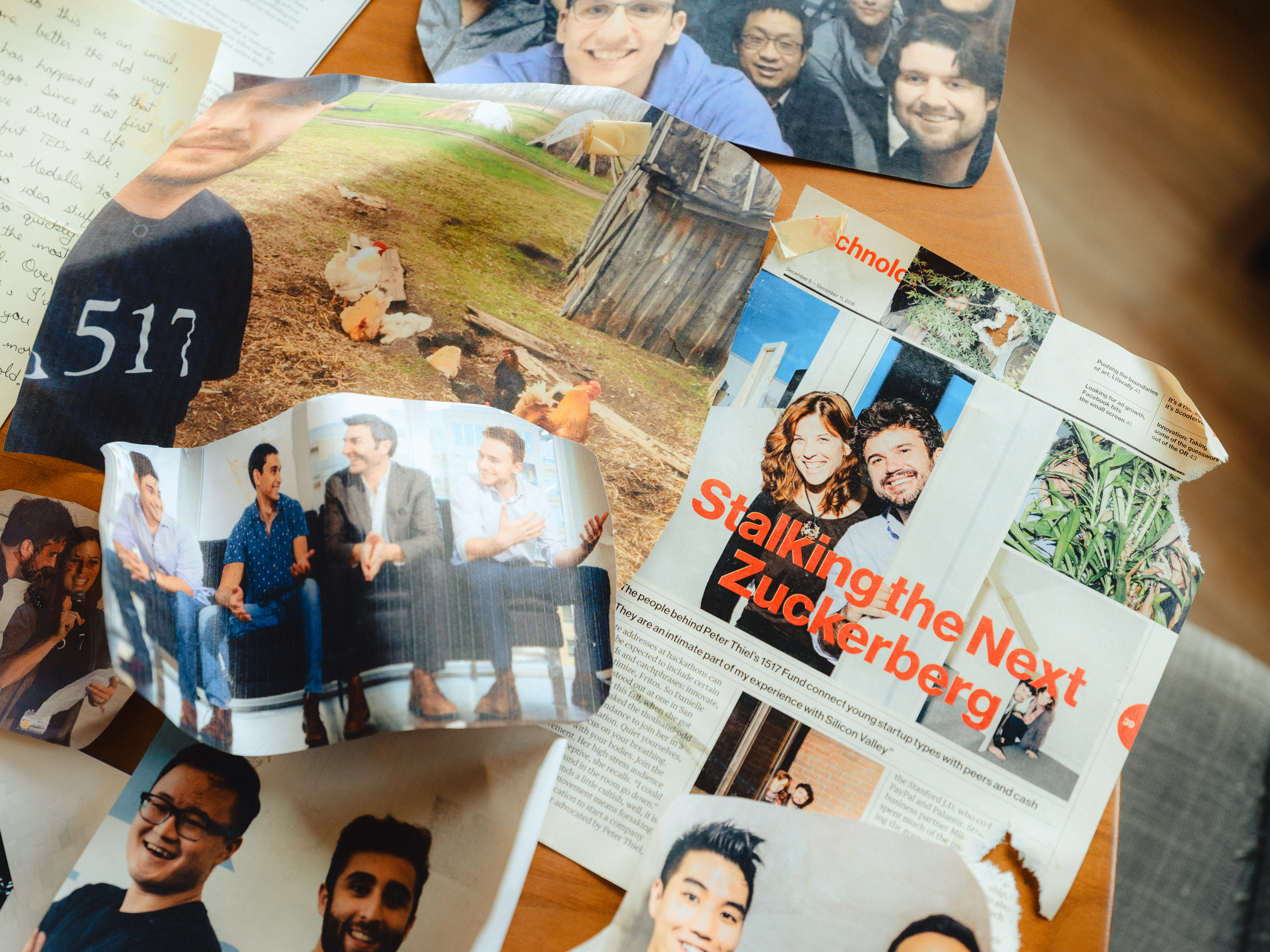
Early fellows were running into a bit of a wall. “We saw, even five years in, that funds weren’t taking fellows seriously. They wouldn’t take a pitch meeting or offer feedback. I remember thinking, ‘If investors aren’t going to take fellows seriously, maybe we should just become investors,’” she says.
Strachman describes the fellowship as a two-year program with a 10-year timeline. Gibson says years three through six were among the worst for the program’s reputation; it really should’ve been compared to a venture portfolio’s J-curve of success.
In 2015, Strachman and Gibson left the fellowship to start 1517 Fund: a venture fund for founders without degrees. It was named after the year Martin Luther nailed his 95 theses to the church door in Wittenberg, criticizing the sale of indulgences, which helped spark the Protestant Reformation. 1517 likens the modern university to the church, selling expensive pieces of paper on the promise of a secure future. Thiel was their first LP. And now, the fund has raised over $300M and has been the first check in companies like Lambda (AI infrastructure and hardware), Mach Industries (defense tech), Loom (screen recording tool acquired by Atlassian for $975M in October 2023) and more.
Their last year running the fellowship, Strachman and Gibson experimented with handing out $1,000 grants at Thiel Summits — and the idea came with them to 1517. One of their first went to Noah Shutty, a physicist who’d go on to co-found voice AI platform Deepgram. Strachman and Gibson encouraged him to attend graduate school because it was so obvious he loved physics. But in a handwritten letter he later sent to Strachman (that he also typed out, worried she wouldn’t be able to read his handwriting), he said he really wanted to hear the opposite: start the company. 1517 was one of Deepgram’s first backers.
After Strachman and Gibson departed, the fellowship also went through some changes.
The age limit increased to 22 years old and the grant is now $250,000. In 2016, there were 6,000 applicants — but ~60% of that year's fellows hadn't applied, they were recruited by Blake Masters (President of the Thiel Foundation) and Jack Abraham (former Executive Director and Executive Chairman of the Thiel Fellowship). Strachman and Gibson also recommended and referred ~20% of each year’s selected Thiel Fellows themselves.
Another change was fellows also having to keep the program’s staff updated on revenue, expenses and cash flow. Fellows became increasingly tech-focused and are more mature entrepreneurs. Brendan Foody, Adarsh Hiremath and Surya Midha were 2024 fellows who co-founded AI recruiting startup Mercor. That 2024 group included Walden Yan, co-founder of Cognition, the company behind autonomous software agent Devin. It also included Gavin Uberti, Robert Wachen, and Chris Zhu who co-founded AI hardware company Etched.
The companies fellows helped build have generated extraordinary value. Budget hotel chain OYO Rooms (Ritesh Agarwal, 2013 fellow), in-space manufacturing company Varda Space Industries (Delian Asparouhov, 2013 fellow) and cancer blood-testing company Freenome (Riley Ennis, 2013 fellow) have billion-dollar valuations. There have been a number of acquisitions. Examples include Workflow, the productivity app started by 2014 fellows Ari Weinstein and Conrad Kramer, which was purchased by Apple and became Shortcuts. They then started another company that was acquired by OpenAI in 2025. And Jarred Sumner, a 2014 fellow, started all-in-one JavaScript runtime company Bun, which was acquired by Anthropic.
The Thiel Foundation’s own accounting said in 2022 that there was $47B in fellow-created company value, excluding Ethereum. In 2025, Fortune put fellow-created company value at over $100B across 11 unicorns. Another tally in 2025 said it was $750B and put the unicorn hit rate at nearly 14%. (These figures don’t reflect some recent valuations, like Anthropic’s May 2026 $965B valuation or Cognition's $48B valuation as of September 2026.) However you count it, the input side stays small: about $30M in grants across 15 years to nearly 300 fellows.
Many went on to shape the world in other ways too. 2011 fellow David Luan co-founded computer vision startup Dextro, then became OpenAI’s VP of Engineering and ran Amazon’s AI lab in San Francisco. Nick Cammarata, a 2011 fellow, became an AI researcher at OpenAI. And 2014 fellow Ishaan Gulrajani became an ML researcher and was the lead author on a foundational paper about how to train systems that generate realistic images. Taylor Wilson, a 2012 fellow who had achieved nuclear fusion by the time he was 14, was offered federal funding for radiation detectors.
In 2016, when a reporter asked Thiel about the fellowship, he said it accomplished one of its primary goals of promoting entrepreneurship as a viable alternative to college. “Entrepreneurship has become a line you put on your resume,” he said.
But when I ask about the success of the fellowship in those first years, everyone differs on what constitutes success, and how much cultural change it caused. “Your questions imply that there was just so much more intentionality to what was going on than there possibly was,” says Lindy Fishburne, former Executive Director of Breakout Labs at the Thiel Foundation.
Strachman feels aligned with Thiel: “The real goal of the fellowship was to change the cultural conversation, to make it acceptable for a young person to pursue a different path than going to college for four years.” She says that the impact is much broader than the outcomes of the fellows. “We heard from applicants regularly that our program, even when not selected, gave applicants permission to talk to their parents about taking another path.”
She also cites other measures of success. One is that, in conversations about skipping college and the education bubble, Thiel is no longer the lightning rod figure — showing that this path has become more normal. It even reached Strachman’s family; her younger cousins now go to trade school with their parents' blessing. “When I was in high school, if you went to trade school, it meant you were a dunce. It wasn’t something you talked about.” Another, she says, is that there are now more fellowships that support young people, which the Thiel Fellowship paved the way for.
Field measures speed, not culture. “The overall macro trends in terms of how people view education were going to happen anyway,” he says. “But I think the Thiel Fellowship did accelerate people’s lives.” Not everyone goes on to build the next big company — but whatever path someone was on, he believes the fellowship compressed it. He cites researchers from his own year who skipped undergrad entirely and went straight to PhD programs.
Gibson looks at geography. He believes it’s normal for students in the Bay Area to leave school now and like Field, thinks that trend would’ve continued on its own. But outside the Valley? “The impact or influence has been quite weak. America is still very hellbent on trying to send everyone to college. Most parents see it as a singular path to a fulfilling, successful life.”
Noor Siddiqui, a 2012 fellow, thinks there was too much impact in a narrow place. She says in tech, founder fetishism almost created a new kind of conformity. “In the beginning, it was these weird tinkerer types. Now people are coming in at Series A or with $10M in revenue.”
In some ways, it seems the fellowship has become the thing it was built against: an institution young people come to for approval. Its acceptance rate sits below 1%, more selective than Harvard.
“I feel conflicted. The world I want to live in is one in which substance always comes first,” Strachman says.
That world doesn’t exist. But the fellowship has helped fellows navigate a world where credentials do matter. 2011 fellow Dale Stephens said the fellowship helped convince people he was a “valuable human being” when he was first starting out and the greatest value of the fellowship was “the network and brand name.” 2014 fellow Fouad Matin said it was “a flag, like a beacon. Even if you don't do the fellowship, it legitimized our work.”
Strachman didn’t want to create another badge. But fellows say that being chosen was part of what made the program useful — someone noticed what they were trying to do and took it seriously enough to offer money, time and support. The recognition mattered.
“A lot of people like to claim they’re contrarian in Silicon Valley,” Field told me. “Danielle actually is.”
So I ask Strachman a version of the question the fellowship once asked Field: what important truth do very few people agree with you on? “Artists are going to make an absolute killing. That which is made by the human hand and soul is going to get more valuable,” she says. 1517 has already written a $100,000 check to a pair of brothers building statues.
As I’m standing up, Strachman says, “Wait, I’ve got another one: I don’t sleep with a pillow.”